Key Takeaway
While the Poonch fire is a localized tragedy for unorganized retailers, the Indian equity markets remain insulated due to the lack of listed exposure and the overwhelming dominance of organized retail growth in Tier 1 and 2 cities.
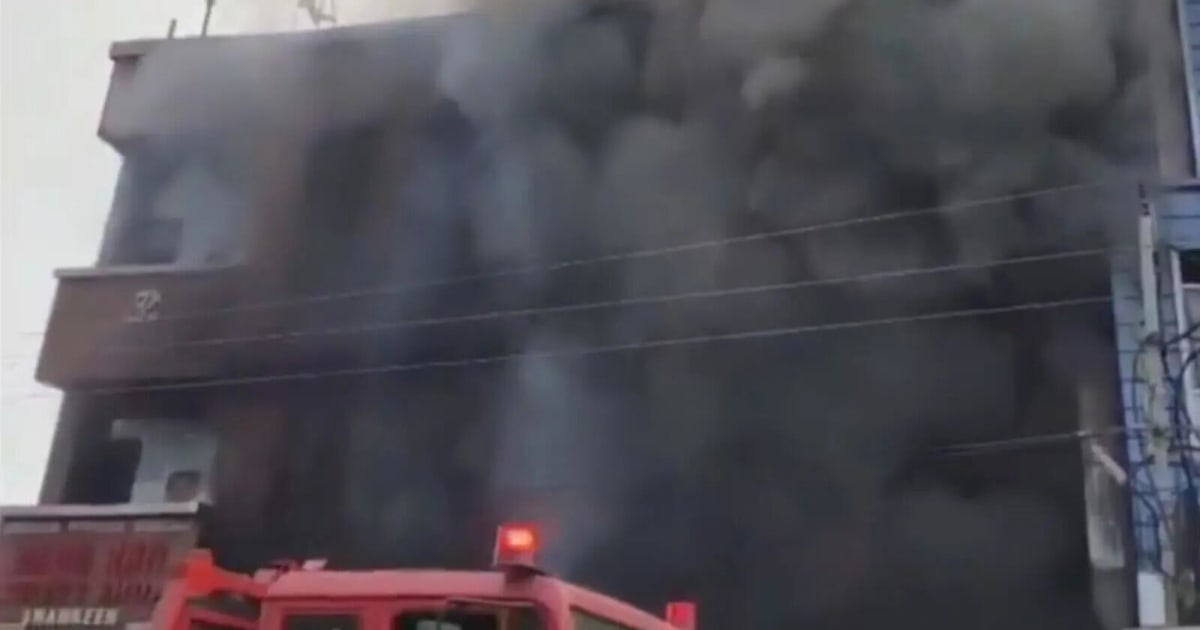
A localized fire in Poonch, Jammu & Kashmir, has devastated nearly a dozen retail shops, highlighting the vulnerability of India's unorganized retail sector. This investigative report explores why such micro-local events fail to trigger market volatility and what it reveals about the risk-assessment models used by institutional investors for regional exposure.
The Anatomy of a Micro-Local Event: The Poonch Fire Incident
In the early hours of the morning in Bufliaz, a critical junction in the Poonch district of Jammu & Kashmir, a massive fire broke out, gutting approximately a dozen retail establishments. From a humanitarian and local economic perspective, the loss is acute. These shops represent the primary livelihood for families in a region where economic opportunities are often constrained by geography and infrastructure. However, from the high-altitude perspective of a senior financial analyst at WelthWest Research Desk, this event serves as a classic case study in market decoupling.
The incident, while tragic, underscores a fundamental truth about the modern Indian economy: the vast chasm between the unorganized 'kirana' and small-town retail ecosystem and the institutionalized, listed retail giants that dictate the movement of the Nifty 50 and BSE Sensex. To understand why this fire didn't cause a ripple in the share prices of major retailers, we must look at the scale of operations and the geographical concentration of listed entities.
How does local fire damage affect insurance stocks?
One of the first questions investors ask during localized disasters is the impact on the insurance sector. In the case of the Poonch fire, the impact on listed giants like The New India Assurance Company (NIACL) or General Insurance Corporation of India (GICRE) is statistically negligible. Most shops in such remote, unorganized pockets either lack comprehensive fire insurance or are covered by micro-insurance policies with low payout ceilings. For a company like NIACL, which boasts a market capitalization of over ₹35,000 crore, a claim involving a dozen small-town shops doesn't even register as a 'rounding error' on their quarterly balance sheet.
Deep Market Impact Analysis: The Resilience of Organized Retail
The Indian retail market is currently valued at approximately $800 billion, with organized retail accounting for roughly 12-15%. The fire in Poonch affected the 85%—the unorganized sector. Historically, the Indian market only reacts to localized disasters when they threaten supply chain hubs or industrial clusters. For instance, a fire in the chemical belts of Gujarat or the textile hubs of Tirupur can send sectoral indices down by 2-3% within hours. In contrast, the Bufliaz incident is a localized consumption disruption with zero impact on the national supply chain.
Data from the Ministry of Statistics and Programme Implementation (MOSPI) suggests that J&K's contribution to India's overall GVA (Gross Value Added) is less than 1%. Within that, the retail contribution from the Poonch district is a fraction of a percent. Therefore, the Nifty Retail Index remains unaffected. However, this event highlights the 'Risk Premium' associated with regional instability and infrastructure gaps in border areas, which keeps large-scale institutional investment in J&K retail at a cautious 'Wait and Watch' stance.
Is J&K retail a growth driver for NSE listed companies?
While the Poonch fire affects local players, the broader J&K region is becoming a frontier for organized retail. Companies like Reliance Retail and Trent Ltd have been scouting for locations in Jammu and Srinagar. However, the 'hinterland' like Poonch remains the stronghold of the unorganized sector. For investors, the takeaway is clear: the growth story of Indian retail is moving toward Tier 3 and 4 cities, but the risk remains concentrated in the unorganized players who lack the fire safety standards and insurance backing of their listed counterparts.
Stock-by-Stock Breakdown: Analyzing Indirect Exposure
Though no stock is directly 'hit' by the fire, we analyze the players who define the landscape of the sector and the region:
- New India Assurance (NIACL) [NSE: NIACL]: As the largest general insurer, NIACL has the widest reach in J&K. Current P/E ratio stands around 35x. While the Poonch claims will be minor, any uptick in regional fire incidents could marginally increase the loss ratio for their 'Fire and Allied Perils' segment in the Northern zone.
- Reliance Industries (RIL) [NSE: RELIANCE]: Through Reliance Retail, RIL is the elephant in the room. With a market cap exceeding ₹19 lakh crore, RIL's strategy involves replacing the very type of unorganized shops lost in Poonch with organized 'Smart Points.' This incident reinforces the 'safety and reliability' narrative of organized retail.
- Trent Ltd [NSE: TRENT]: The operator of Westside and Zudio. Trent has seen a 150% return in the last year. Their expansion strategy avoids volatile border districts for now, focusing instead on stable urban centers, making them immune to such micro-local disruptions.
- GIC RE [NSE: GICRE]: As the national reinsurer, GIC RE's exposure is systemic. They only feel the heat when a catastrophe (like the 2014 J&K floods) triggers thousands of simultaneous claims. A single fire in Bufliaz is a non-event for their ₹60,000 crore+ market cap.
Expert Perspective: The Bull vs. Bear Case for Regional Retail
"The Poonch fire is a micro-economic tragedy but a macro-economic non-event. The real story for investors is the 'Insurance Gap' in rural India. If these shops were part of a listed franchise, the recovery would be swift and the stock impact would be absorbed by the diversified nature of the parent company." — Senior Analyst, WelthWest Research
The Bear View: Bears might argue that repeated localized incidents in J&K signal a persistent infrastructure risk (electrical short circuits, poor fire response) that will continue to deter the entry of organized retail giants, capping the regional growth potential.
The Bull View: Bulls see this as the 'Inorganic Opportunity.' As unorganized shops face risks they cannot hedge, the shift toward organized, listed retail players (like V-Mart or Aditya Birla Fashion) will accelerate, providing a long-term tailwind for organized retail stocks.
Actionable Investor Playbook
How should a sophisticated investor react to news of this nature?
- Stay the Course: Do not sell retail or insurance stocks based on micro-local fire news. The correlation coefficient between such events and Nifty performance is near zero.
- Watch the 'Shift': Monitor the Organized Retail Penetration (ORP) metrics in quarterly reports of companies like V-Mart Retail [NSE: VMART]. V-Mart is often the first listed player to enter regions like J&K.
- Insurance Entry Points: If insurance stocks like NIACL dip due to knee-jerk reactions to regional news, it often presents a value-buying opportunity, as the fundamentals of premium growth remain intact.
Risk Matrix: Regional Disruption Assessment
| Risk Factor | Probability | Market Impact | Mitigation Status |
|---|---|---|---|
| Regional Supply Chain Break | Low | Medium | Diverse sourcing routes |
| Insurance Claim Surge | Very Low | Minimal | Reinsurance treaties in place |
| Infrastructure Failure (Power/Fire) | High | Localized Only | None for unorganized sector |
What to Watch Next: The Catalysts for J&K Economy
Investors should look past the smoke in Poonch and focus on these upcoming catalysts:
- J&K Industrial Policy Updates: Any new subsidies for retail infrastructure could bring listed players closer to the border districts.
- Insurance Regulatory Changes: IRDAI's push for 'Insurance for All by 2047' could increase penetration in areas like Bufliaz, turning future losses into measurable data for listed insurers.
- The Chenab Bridge Connectivity: As rail connectivity improves, the logistics cost for organized retail in J&K will drop, potentially leading to the first 'Big Box' retail stores in the region.
In conclusion, while the fire in Poonch is a stark reminder of the fragility of small-scale commerce, the Indian stock market's engine continues to run on the fuel of large-scale urbanization and organized consumption. For the definitive resource on market-moving events, stay tuned to WelthWest Research Desk.
Disclaimer: This content is generated by WelthWest Research Desk based on publicly available reports and is for informational purposes only. It does not constitute financial advice, investment recommendations, or an offer to buy or sell securities. Always consult a qualified financial advisor before making investment decisions.


