Key Takeaway
The cooling of the US semiconductor sector is a structural warning for Indian IT exporters. As enterprise tech budgets tighten, investors should pivot from high-beta tech plays toward defensive, domestic consumption-led sectors.
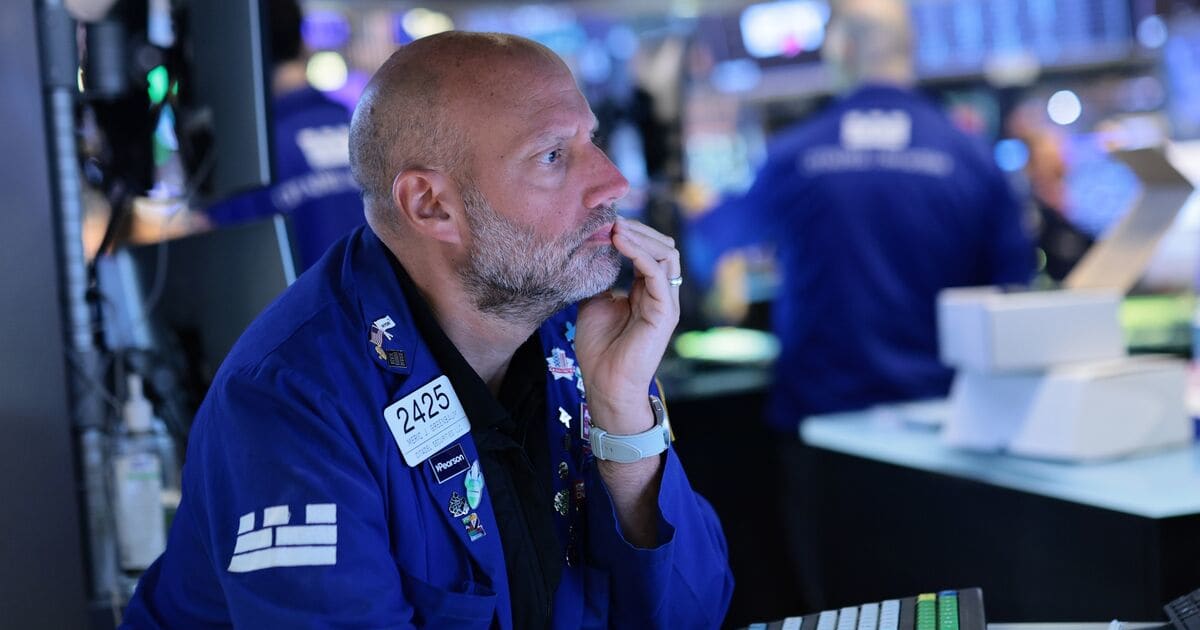
A sharp correction in US semiconductor stocks is sending shockwaves through global markets, casting doubt on the sustainability of the AI-driven rally. For Indian investors, this signals a potential reversal in the IT sector, which has long relied on global enterprise spending. We analyze the risks to major Indian IT giants and map out a defensive strategy for the coming volatility.
The Semiconductor Correction: A Structural Shift
The recent volatility in US semiconductor stocks—the engine room of the global AI frenzy—is not merely a transient market dip. It is a fundamental reassessment of the capital expenditure cycles that have fueled the Nasdaq’s dominance for the past eighteen months. When firms like Nvidia and AMD face valuation compression, the ripple effect is felt acutely in the Indian equity markets. The correlation between the Philadelphia Semiconductor Index (SOX) and the Nifty IT index has reached a multi-year high, suggesting that any sustained cooling in US hardware spending will inevitably lead to a contraction in software service demand.
Why does the US chip pullback matter for Indian IT?
Indian IT services firms are the ‘plumbing’ of global enterprise infrastructure. While the headlines focus on hardware, the underlying reality is that IT services budgets are often the first to be trimmed when clients see their own capital investment cycles stalling. If global corporations pause their digital transformation projects due to uncertainty in hardware availability or cost, the revenue pipelines for companies like TCS and Infosys begin to narrow. We are currently witnessing a shift from ‘AI-at-all-costs’ spending to ‘AI-for-efficiency,’ a transition that will squeeze the margins of service providers who cannot prove immediate ROI to their clients.
How will the semiconductor correction impact Indian IT margins?
The impact is two-fold: direct and psychological. Directly, as US hardware costs rise or supply chains tighten, enterprise clients are reallocating their budgets away from discretionary software spending. Psychologically, Indian markets are hypersensitive to FII (Foreign Institutional Investor) flows. When the Nasdaq enters a correction phase, FIIs typically repatriate capital from emerging markets to shore up liquidity, disproportionately hitting high-beta growth stocks in the Nifty IT basket.
Deep Market Impact: Historical Parallels
To understand the current risk, look back to the 2022 tech correction. As the Federal Reserve pivoted to a hawkish stance, the Nifty IT index corrected by over 25% from its peak, significantly underperforming the broader market. The current scenario carries a similar weight. While the 2022 dip was interest-rate driven, the current slump is earnings-driven. With Indian IT firms currently trading at a P/E premium (TCS at ~30x, Infosys at ~28x), there is very little margin for error. Should quarterly results show even minor revenue deceleration, the multiple contraction could be swift and severe.
Stock-by-Stock Breakdown: Which IT Giants are Most Exposed?
- TCS (TCS.NS): As a bellwether for the industry, TCS is highly sensitive to total enterprise spend. With a market cap of over ₹15 lakh crore, any FII outflow to cover US tech positions will likely see TCS as a primary liquidity source.
- Infosys (INFY.NS): Heavily reliant on North American financial services clients, Infosys faces a double-whammy: a slowdown in chip-linked tech spending and a potential recessionary trend in the US banking sector.
- HCLTech (HCLTECH.NS): HCL’s heavy focus on engineering and R&D services makes it a direct proxy for global product manufacturing. If the semiconductor slump forces manufacturers to pull back on R&D, HCL’s growth projections are at significant risk.
- Wipro (WIPRO.NS): Currently undergoing a structural transformation, Wipro lacks the defensive balance sheet depth of its larger peers, making it more vulnerable to sharp sentiment-driven sell-offs.
- Tech Mahindra (TECHM.NS): Heavily exposed to the communications and 5G infrastructure space, TechM faces risks if telecom operators slash capital expenditure in response to broader tech sector volatility.
Expert Perspective: Bulls vs. Bears
The Bull Case: Proponents argue that the AI integration phase is secular and irreversible. They contend that even if hardware spending slows, software adoption will accelerate as companies scramble to optimize existing infrastructure, thereby insulating Indian IT firms.
The Bear Case: Skeptics point to the 'AI Fatigue' narrative. They argue that the current valuations are based on unsustainable growth assumptions. If enterprise IT budgets are cut by even 5-7%, the operating leverage of IT majors will turn negative, leading to a massive earnings downgrade cycle.
Actionable Investor Playbook
Investors should move from a growth-at-any-price mindset to a quality-defensive strategy.
- Reduce Exposure: Trim positions in high-beta IT mid-caps that have run up significantly on the 'AI-hype' narrative.
- Pivot to Defensives: Rotate capital into high-dividend-yielding FMCG and Pharma stocks, which historically demonstrate negative correlation to global tech volatility.
- Watch Entry Points: Do not 'catch the falling knife' in IT stocks. Wait for a stabilization in the Nasdaq-100 and a clear bottoming of US semiconductor earnings expectations.
Risk Matrix
| Risk Factor | Probability | Impact |
|---|---|---|
| Prolonged US Tech Recession | Medium | High |
| Sharp INR Appreciation (hurts IT margins) | Low | Medium |
| Sustained FII Outflows | High | High |
What to Watch Next
Keep a close eye on the upcoming quarterly earnings guidance from major US cloud providers (AWS, Azure, Google Cloud). Their commentary on enterprise spending remains the single most important catalyst for the Indian IT sector. Additionally, track the US 10-year Treasury yield; any spike above 4.5% will likely accelerate the current rotation out of tech and into safer assets, further pressuring Nifty IT valuations.
Disclaimer: This content is generated by WelthWest Research Desk based on publicly available reports and is for informational purposes only. It does not constitute financial advice, investment recommendations, or an offer to buy or sell securities. Always consult a qualified financial advisor before making investment decisions.


